Big Noise has been subject to independent evaluation for over a decade. Early research by the Glasgow Centre for Population Health (GCPH) identified its potential to deliver long‑term positive change, with longitudinal work tracking participants since 2013.
This independent evaluation builds on previous research by examining Big Noise's current delivery, impact, and value for money. Using a mixed-method approach, the study captures the voices and experiences of children, young people, families, and community members involved in Big Noise.
Big Noise creates meaningful and lasting change
Strong evidence of positive impacts on wellbeing, confidence, social connection and opportunities for children and young people.
After-school participation is where impact deepens
The greatest and most sustained benefits emerge through long-term engagement in after-school programmes.
Change develops over time through connected pathways
Experiences of safety, belonging and enjoyment build confidence, engagement and longer-term outcomes.
What makes Big Noise work
Trusted relationships, supportive environments and collaborative music-making drive the strongest impacts.
Why this evaluation matters
Big Noise demonstrates the power of long-term, place-based and relational approaches to achieving lasting change.
Read the report in full by selecting the PDF icon below:
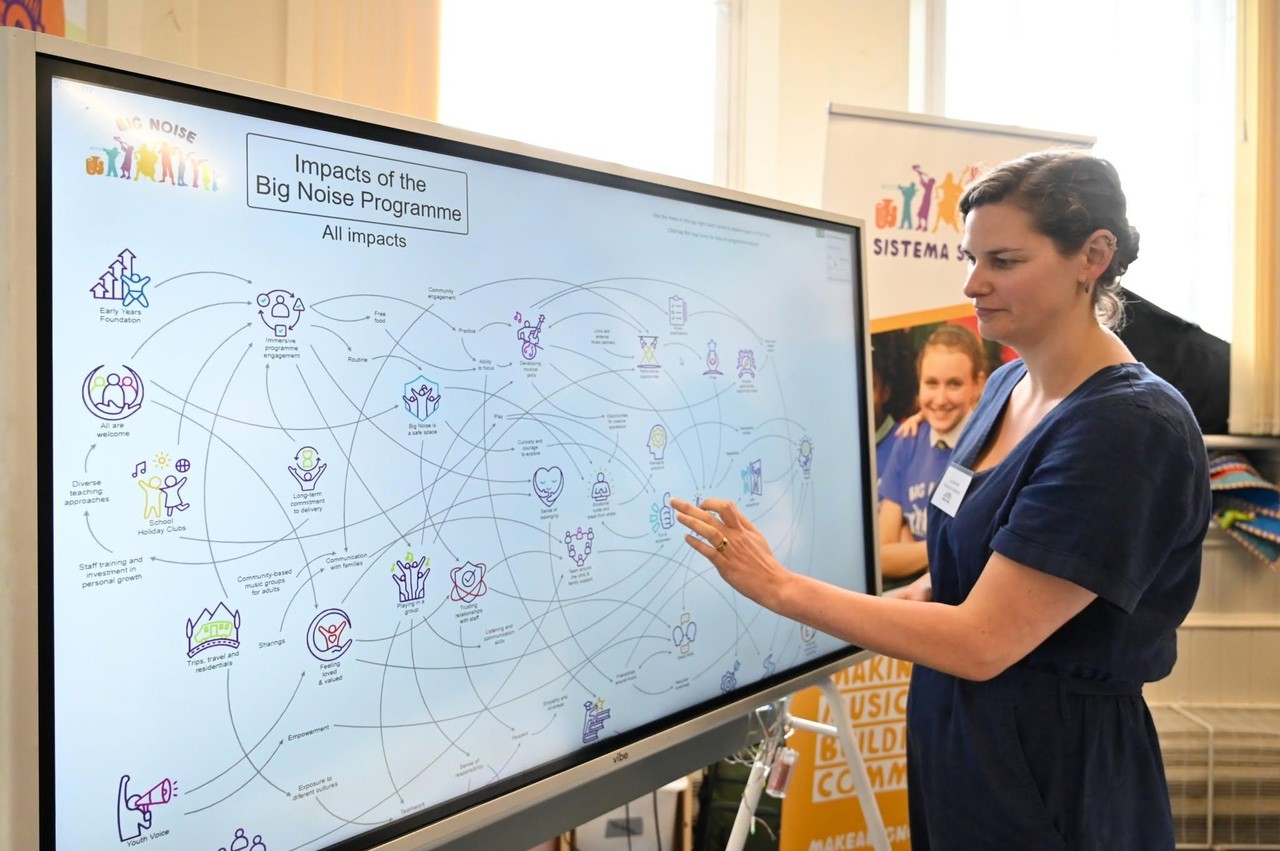
Alongside the evaluation report, we're pleased to share an interactive impact map created by the evaluation team. Bringing together evidence, lived experience and real-life case studies, it offers a unique way to explore how Big Noise supports children and young people, and the pathways through which lasting change happens.
The map explores four key areas of impact – musical skill development, emotional wellbeing, social networks and post-school pathways. Each section includes interactive evidence from the evaluation, alongside real stories from children and young people that help bring the findings to life.